

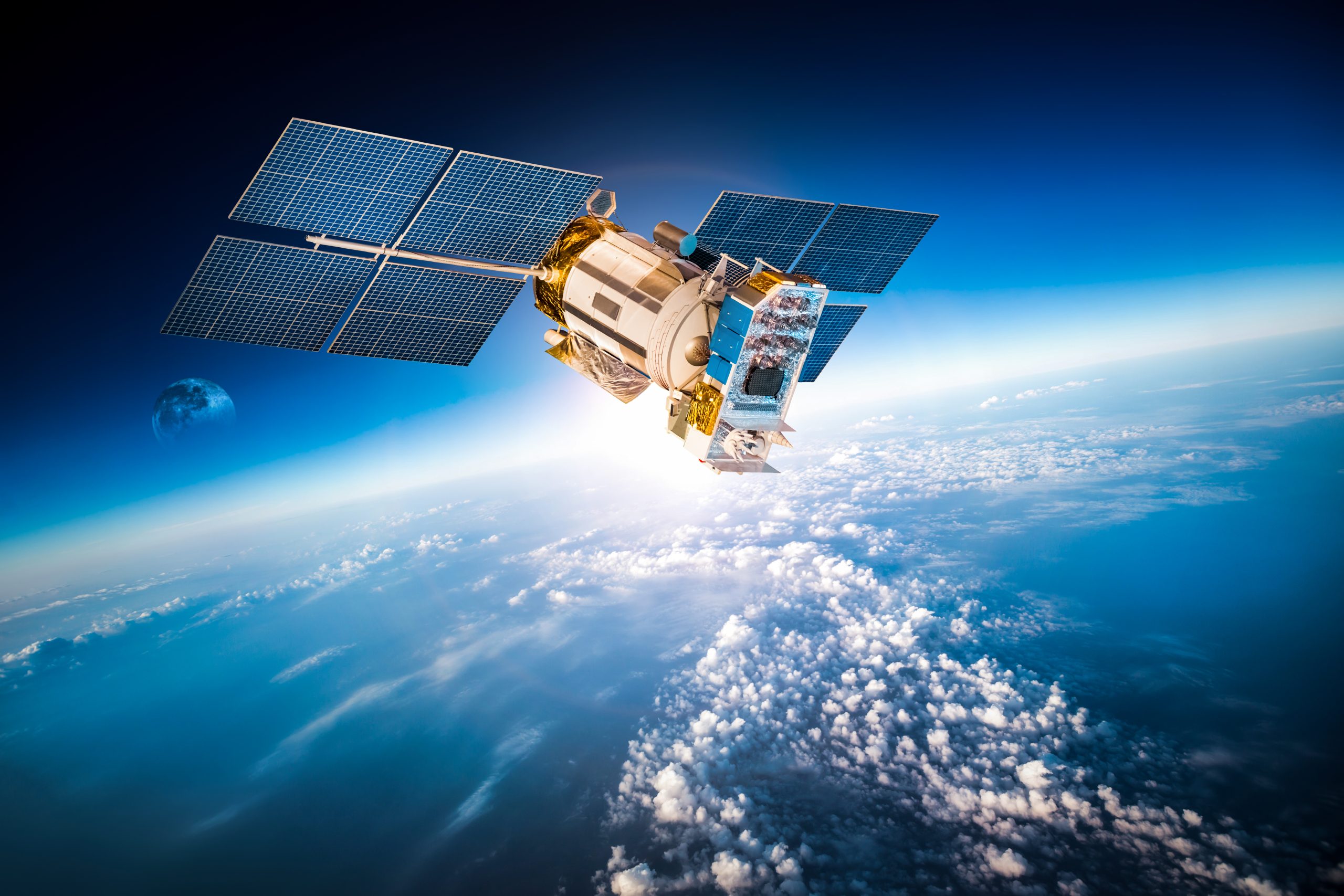

In the previous two articles, we looked at how a new Cold War is being fought for control of the Moon and how a fortune in resources such as Helium-3 awaits the winner. But while superpowers invest billions in their space programs, they have almost unintentionally opened a new frontier for private initiative. This is the rise of NewSpace, the democratization of space and the consolidation of a new economy full of opportunities for entrepreneurs who are willing to look beyond the horizon.
How the Lunar Race Fuels Private Business
High-profile government missions such as the Artemis program act as the locomotive that pulls the entire industry forward. They not only develop pioneering technologies but also create long-term and stable demand for products and services. NASA no longer builds everything on its own. Instead, it outsources tasks such as transportation to companies like SpaceX.
This model is now being replicated at smaller scales, generating a supply chain where agile and specialized startups can carve out their place. The state assumes the risk, but the business opportunity opens up for the private sector.
A universe of niches for entrepreneurs
The space economy is not a monolith. It consists of different segments with very different barriers to entry. The key for an entrepreneur is to know where to position themselves and to learn from the pioneers already shaping the sector.
Downstream: the gold of space data
This is the most accessible and fastest-growing area. The goal is not to go into space, but to use the data it provides to deliver solutions on Earth.
-
Precision Agriculture: Companies using satellite data to monitor crop health and optimize water and fertilizer use. Example: The German startup constellr uses infrared thermal imaging from space to detect water stress in plants before it becomes visible.
-
Environmental Monitoring: Companies that provide data to measure deforestation or the impact of natural disasters. Example: The Swiss company ICEYE has developed a constellation of radar satellites (SAR) that can “see” through clouds, making them crucial for flood management and insurance assessments.
Upstream: builders of the new frontier
This sector develops the infrastructure that goes into space. Specialization in high-value components is key.
-
Microlaunchers: Rockets designed to quickly and efficiently put small satellites into orbit. Example: The Spanish company PLD Space, with its Miura rockets, is a European leader, offering a “taxi service” to space.
-
Nanosatellites for IoT: Constellations designed to connect Internet of Things devices. Example: The Madrid-based Fossa Systems designs and launches picosatellites that provide connectivity for industries such as agriculture and logistics.
-
Critical Components: Essential parts that other companies need for their missions. Example: The Malaga-based DHV Technology specializes in designing and producing high-efficiency solar panels for small satellites.
In-orbit services: mechanics of the cosmos
This is the most futuristic segment, but it is already attracting large investments to solve the challenges of an increasingly congested orbit.
-
Space Debris Removal: Development of spacecraft capable of capturing and deorbiting abandoned satellites. Example: The Swiss startup ClearSpace signed a pioneering contract with ESA for the first mission designed to actively remove space junk.
-
Orbital Logistics: Creation of space “tugs” that can move satellites between orbits. Example: The Italian company D-Orbit has developed a vehicle that acts as a “last-mile bus” in space, releasing multiple satellites into precise orbits.
First steps in zero gravity
Starting a space business is no longer science fiction, but it requires a clear strategy.
-
Find a niche. Do not try to build a rocket. Focus on solving a very specific problem, whether with data (downstream) or with a component (upstream).
-
Leverage the ecosystem. Connect with universities, research centers, and specialized incubators. Collaboration is essential.
-
Seek public funding. Programs such as Spain’s Aerospace PERTE provide crucial financing for the earliest and riskiest development phases.
-
Think globally. The space economy is, by definition, global. Your market has no borders.
The image of a space entrepreneur is no longer that of an eccentric billionaire. Today, it could be a software engineer optimizing water use in agriculture, a cybersecurity expert protecting a satellite constellation, or an engineer designing a more efficient antenna. The race to the Moon has created the playing field. Now, entrepreneurs have the chance to make their move.
Sources:
- McKinsey & Company: The space economy: An opportunity for entrepreneurs
- Ministerio de Ciencia, Innovación y Universidades (España): PERTE Aeroespacial
- Harvard Business Review: The New Space Race Is a Business Opportunity for All
- PwC: New Space: la nueva carrera espacial, mucho más terrenal
- CaixaBank Research: La economía del espacio o «New Space»: ¿qué oportunidades de negocio ofrece?

