

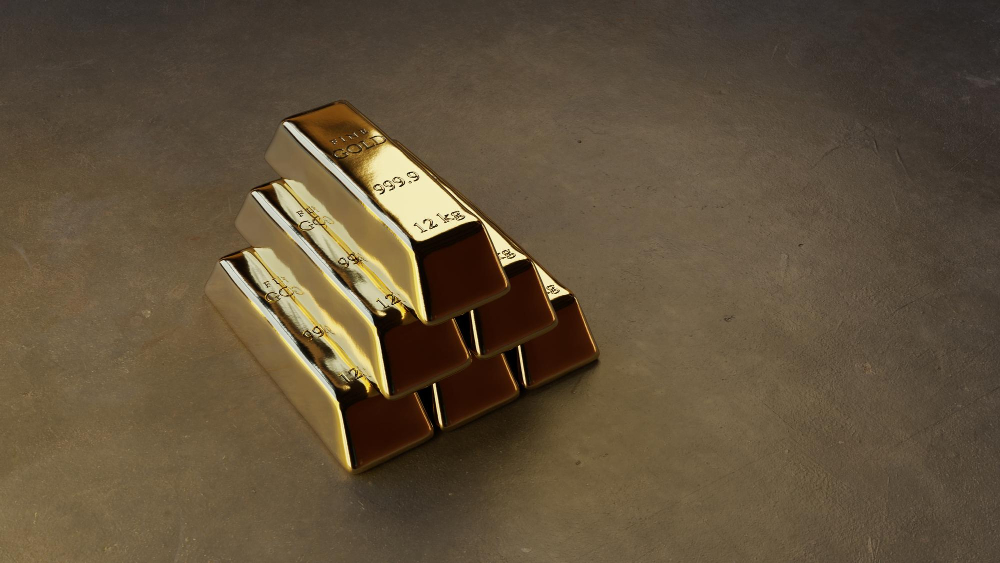

Gold has seen its historic rally grind to a sudden stop. After weeks of near-continuous gains that pushed the metal from $3,300 to an all-time high of $4,336 per ounce, gold suffered its largest single-day correction in 12 years on Tuesday, October 27, losing 5.74% in a session. The decline erased $1.7 trillion in global market value—marking the largest one-day loss of an asset in history.
While past sessions have seen steeper percentage drops—such as nearly 17% in 1980—the scale of the global market today, with over 216,000 tonnes of mined gold, and the record-high prices, makes this economic loss unprecedented. By comparison, in 1980 there were around 100,000 tonnes of gold and prices hovered near $800 per ounce, resulting in a smaller overall market impact despite larger percentage swings. To put the $1.7 trillion wiped out into perspective, it is almost double the current capitalization of Spain’s Ibex 35, which stands at approximately €974 billion.
A Rally Fueled by ‘Debasement Trade’ and Central Bank Buying
The surge in gold prices earlier this year was driven largely by the so-called ‘debasement trade’—investors’ distrust of fiat currencies, which have steadily lost value over decades. This, combined with massive central bank purchases, particularly by China, and growing demand for protection against fiscal deficits and geopolitical tensions, pushed gold to historic highs.
The confidence of central banks in gold—seen as a hedge against the erosion of traditional currencies—was a key factor in sustaining the rally. Yet, some analysts now believe the surge has overshot fundamentals. Charlie Massy-Collier, strategist at Citigroup, noted: “At some point, the underlying forces driving the gold rally will return—that is, ongoing central bank demand to diversify away from the U.S. dollar—but at current prices, there’s no rush to position for that.” Citigroup and other financial institutions have adjusted their recommendations, expecting consolidation near $4,000 per ounce in the coming weeks.
Trade Optimism and Technical Selling Pressure
Another factor behind the sell-off is diminishing safe-haven demand, fueled by a moderation in U.S.-China tensions. President Donald Trump indicated that he expects to meet Xi Jinping soon and reach a “good deal,” reinforcing expectations that trade risks may ease. Analysts from Bloomberg suggest the crash was inevitable: “The slump was an accident waiting to happen,” said macro strategist Ven Ram. “If volatility spiked so late, it may be because hedge funds have begun questioning the risk-return ratio after a stellar year for the commodity.”
Recent Market Movements
Gold has recently broken below key thresholds, falling under $4,000 per ounce for the first time in a month amid optimism over the U.S.-China summit in South Korea and expectations of further Federal Reserve rate cuts. On Monday, October 27, gold dropped to $3,972 per ounce, a 3.4% decline from Friday’s close, marking the first time it breached $4,000 since October 8.
The fall comes as global stock markets continue to hit new highs, reflecting a shift from risk aversion to optimism around growth and trade progress. The rapid rally earlier in 2025, which drove gold through successive all-time highs—including its first rise above $3,000 in March and over $4,000 in early October—has now entered a correction phase.
Historical Context and 2025 Performance
Despite recent declines, gold remains a standout performer in 2025, with year-to-date gains exceeding 50%. Only other precious metals, such as silver, platinum, and palladium, have seen stronger increases.
However, the unprecedented size of the market and the high prices mean that even a moderate percentage drop results in colossal economic losses. Analysts view this correction as part of a necessary recalibration after an extraordinary year for the metal.
Outlook: Consolidation or Further Declines?
Analyst opinions on gold’s future are mixed. Some argue that solid fundamentals—including central bank purchases, institutional buying, and private demand—should provide support, with opportunistic buying likely during corrections. Claudio Wewel, currency strategist at J. Safra Sarasin Sustainable AM, believes these factors could sustain medium- to long-term price increases.
Conversely, Bloomberg’s consensus anticipates further declines, projecting gold could fall to $3,250 per ounce by 2028—a roughly 20% drop from current levels. Axel Botte of Ostrum AM notes that some market participants consider the recent rise excessive, with U.S. Treasury securities regaining their status as a safe haven.
Key Events Ahead
Gold’s trajectory will remain closely tied to U.S.-China trade negotiations, Federal Reserve monetary policy decisions, and broader technical market signals. The London Bullion Market Association conference in Kyoto, Japan—currently hosting nearly 1,000 professional operators, traders, and refiners—highlights the global attention on gold markets. Analysts suggest that levels around $3,500 per ounce could represent a “healthy” price for the market, allowing continued demand from central banks without fueling excessive speculation.
In short, gold is navigating a historic correction. While the metal’s price remains elevated relative to pre-2025 levels, investors are weighing the balance between safe-haven demand, institutional buying, and technical market pressures in an increasingly complex global environment.
Sources:
- El Economista – https://www.eleconomista.es/mercados-cotizaciones/noticias/13606751/10/25/el-hundimiento-del-oro-ha-sido-la-mayor-caida-diaria-del-valor-de-un-activo-en-toda-la-historia.html
- Cinco Días – https://cincodias.elpais.com/mercados-financieros/2025-10-27/el-oro-se-desploma-por-debajo-de-los-4000-dolares-ante-el-optimismo-por-un-acuerdo-comercial-entre-washington-y-pekin.html

