

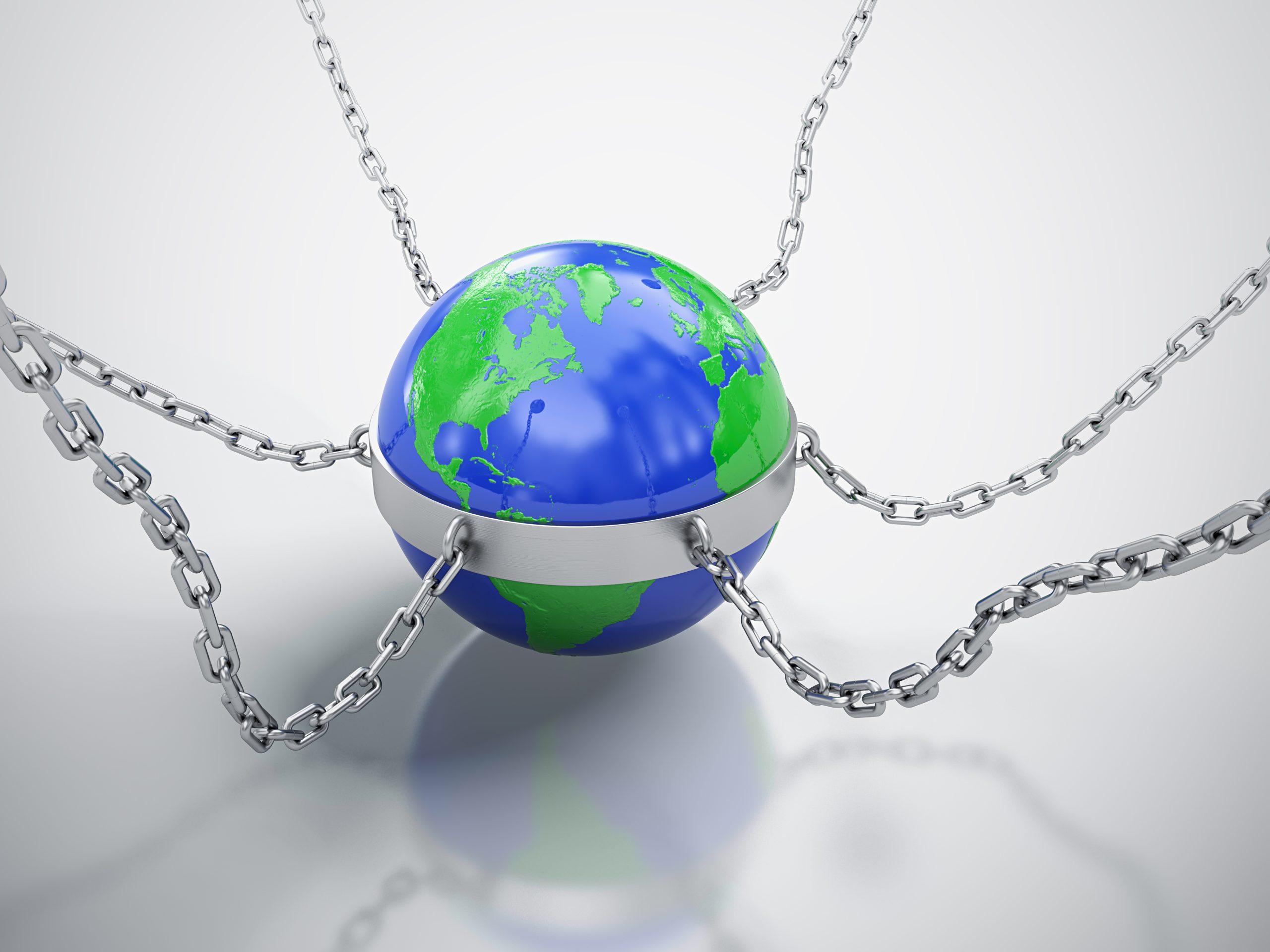

From Washington to Brussels, and all the way to Beijing, economic decisions are increasingly shifting toward a more defensive strategy. Recent UNCTAD data show that while services maintain some strength, goods trade faces growing obstacles: tariffs, quotas, local subsidies, and export controls are reshaping a fragile global supply network. Geopolitical tensions between the US, China, and the European Union accelerate this move toward a trade policy with strategic and sovereign priorities.
The COVID-19 pandemic exposed the vulnerability of relying on distant supply chains, showing that efficiency without resilience can carry a high cost. Prolonged effects of the conflict in Ukraine and recent tariff frictions add to this experience. In response, many governments now prioritize key industries, limit external dependencies, and strengthen long-term protectionist policies.
One example of this trend is the rise of nearshoring: moving part of production to nearby countries, reducing logistics time and risk. In Latin America, this practice is gaining ground, as the global trade map reorganizes and comparative advantages start attracting investments that were previously concentrated in Asia.
When trade becomes geopolitical
Trade is no longer just an economic mechanism—it has become a tool of power. The US, for instance, has imposed minimum tariffs of 10 percent or higher on several trading partners, prompting reactions and mirror measures that heighten commercial uncertainty. At the same time, digitalization and technological competition add tension: countries leading in artificial intelligence, semiconductors, or clean energy establish regulations favoring self-sufficiency, aware that technology also equals security.
Implications for Latin America and other emerging regions
For developing countries, this paradigm shift demands urgent adaptation. Those dependent on exports of intermediate goods or raw materials may feel the impact more if global supply chains fragment. But opportunities also arise: regions close to major markets, with active free trade agreements, can capture relocated investments thanks to nearshoring.
The challenge lies in improving infrastructure, technological training, and institutional stability. Only then can these countries compete effectively in international trade, which increasingly requires stricter climate, ethical, and technological standards.
Toward a more complex globalization
This is not the end of globalization but its transformation. Instead of a uniform global network, a more fragmented globalization emerges, based on trust blocks, regional standards, and strategic alliances. Efficiency is no longer the sole goal; security, resilience, and adaptability become fundamental criteria.
Factors such as traceability, material origins, corporate ethics, and environmental sustainability now strongly influence trade policies and business decisions. Countries and companies that ignore these factors risk being left behind.
Adapting to the new world
Entrepreneurs, investors, and governments must adjust strategies. Supply chains are being redesigned, fiscal and tariff policies are more complex, and investment decisions increasingly depend on geopolitical stability, technological capabilities, and environmental regulations.
The term post-globalization is no longer just a theory. It appears in debates, trade policy decisions, and production moves. Understanding its implications will be key to anticipating which regions gain prominence, which industries emerge, and how the global economy will be rewritten.
Sources:
- El País: La OMC confía en la inteligencia artificial como revulsivo frente a la oleada proteccionista
- UNCTAD: Comercio mundial 2025: La resiliencia está bajo presión
- Reuters: AI set to transform global trade, says World Trade Organization report
- ArXiv: Geopolitical Barriers to Globalization
- Mundo Marítimo: El comercio global se redefine en 2025: proteccionismo, tarifas y nuevas rutas
Related posts:
- BloFin Integrates Apple Pay to Simplify Crypto Purchases for European Traders
- Rising Cyber Threats: Iranian Espionage in Europe and Global Fraud Targeting FIFA World Cup 2026
- OpenAI unveils Sora 2, its new AI video generator
- The Tech Business Gurus that Made it Into 2025 Time’s Magazine 100 Most Influential List

