

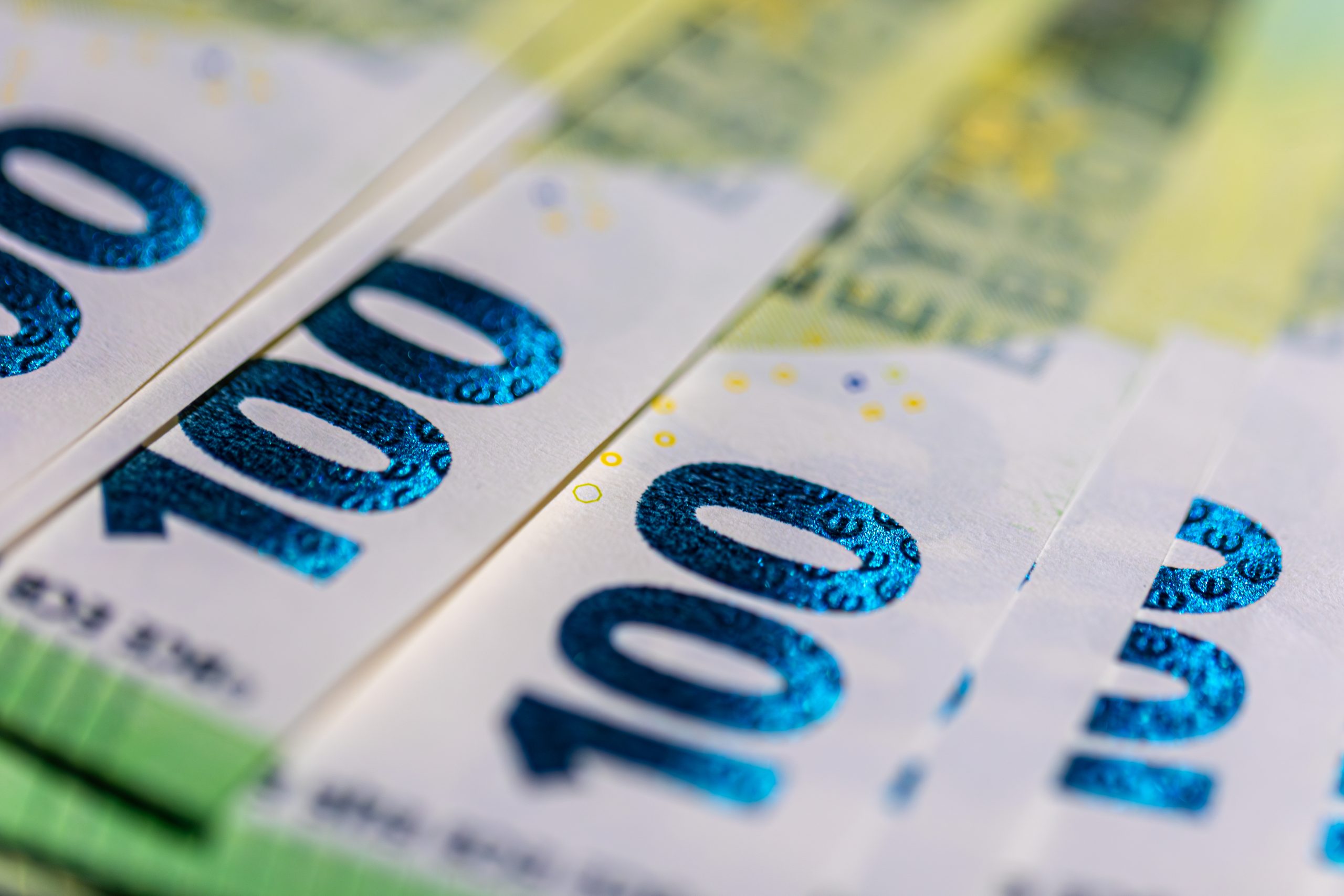

The money we use every day—issued by central banks and backed by state authority—is experiencing its biggest credibility crisis since the gold standard disappeared. The combination of historically high public debt, persistent inflation, and geopolitical tensions has altered risk perception and pushed investors to seek refuge outside fiat money.
According to the International Monetary Fund, the likelihood of a “disorderly correction” in global markets rises as asset prices diverge from macroeconomic fundamentals, reinforcing the idea that the modern monetary system relies more on trust than on real solidity.
The Debasement Trade Explained
Bloomberg has dubbed this phenomenon the Debasement Trade, a term summarizing the flight from fiat currency toward scarce, decentralized, or directly productive assets. The logic is simple but compelling: if traditional currencies systematically lose value, investors will prefer assets whose scarcity or independence offers implicit protection against political influence. The loss of faith in state-issued money has become one of the most visible drivers of global capital flows.
The term debasement, meaning “degradation,” has historical roots in periods when empires reduced the metallic content of coins to finance wars or deficits. Today, degradation is no longer physical but institutional: it occurs when governments expand the money supply or accumulate debt beyond real growth capacity, eroding confidence that money will retain purchasing power. This dynamic explains why capital flows toward hard-to-manipulate assets, from gold to cryptocurrencies or shares of global companies with tangible assets.
The Guardian recently described this shift as “the rebellion against unbacked money,” reflecting its structural significance. This is not a speculative fad but a fundamental questioning of the fiat system that has underpinned global trade for half a century.
Gold: The Classic Safe Haven Returns
Gold has regained prominence not seen since the 1970s. Its price has surpassed $4,000 per ounce, a historic high driven by central banks and sovereign wealth funds. China, India, and Turkey lead accumulation, driven less by speculation than by the need to protect reserves against the volatility of major currencies. In financial markets, flows into gold-backed ETFs have surged, confirming that institutional investors also seek protection against potential currency debasement.
Gold has returned as a benchmark of stability. In a world dominated by debt and fiscal promises, it represents the opposite: a non-counterparty asset with a history of value transcending political cycles. While it may not generate yield, it has become a symbol of resistance against inflation and unlimited monetary expansion.
Cryptocurrencies: From Utopia to Structural Haven
While precious metals regain their aura, cryptocurrencies are solidifying as the digital version of a safe haven. Bitcoin has surpassed $120,000, fueled by institutional funds that no longer see it as a marginal experiment but as a way to diversify monetary risk. Its appeal lies in limited issuance—only 21 million units will ever exist—and independence from central banks.
According to Barron’s, major traditional fund managers are now including Bitcoin and Ethereum in defensive portfolios, recognizing their value as a hedge against inflation and fiat currency depreciation. This shift confirms what we noted in our analysis on Bitcoin in corporate treasury: digital assets have moved from a technological curiosity to a strategic wealth management tool.
Stocks and Real Assets: The Imperfect Refuge
The Debasement Trade is not limited to gold or cryptocurrencies. It also drives rotation toward companies with tangible assets, solid margins, and global exposure. Energy, mining, and infrastructure sectors attract investors seeking protection from fiat erosion. Unlike purely financial assets, these companies can pass cost increases onto prices, maintaining profits even in inflationary environments.
As we explained in our guide on interest rates and savings, the preference for real assets reflects the paradigm shift caused by the end of cheap money: in a world where liquidity is no longer free, value is measured by productivity, not promises.
The Root Problem: Trust and Politics
The flight from fiat stems from a deep cause: the progressive loss of confidence in monetary management. For over a decade, developed economies have treated quantitative easing and fiscal deficits as permanent tools rather than emergency measures. This normalization has led investors to assume governments will inflate debt rather than reduce it, creating a cycle of mistrust that crosses borders.
The Bank for International Settlements warns that central bank independence is “under growing political pressure” and that simultaneous policy errors across economies could destabilize the global monetary architecture. Meanwhile, the use of the dollar and euro as sanction tools has accelerated reserve diversification in Asia and the Middle East, with countries like India and Saudi Arabia increasing holdings of gold and alternative currencies.
Toward a Hybrid Monetary System
This lack of trust is giving rise to a hybrid monetary model combining three architectures: central bank digital currencies (CBDCs), designed to preserve state control over monetary policy; decentralized cryptocurrencies, offering digital sovereignty outside political intervention; and tokenized real assets, combining physical value with digital traceability. The result is direct competition for trust between state, technology, and market.
As we explored in our article on the digital euro, this coexistence will force banks to rethink their intermediation role and regulators to define new stability rules. For the first time since the 20th century, money has ceased to be a state monopoly and become a contested ecosystem.
The New Scarcity
The conclusion is clear: in the 21st century, scarcity is measured not in tons or bytes but in credibility. Gold, crypto, and real assets do not dethrone fiat money, but they put it to the test. Their rise reflects a profound cultural shift: investors now seek not only returns but anchors of trust in a world where state commitments are perceived as fragile and reversible. While governments try to restore confidence in their currencies, markets have already moved ahead, redrawing the value map.
Ultimately, the Debasement Trade signals the financial system’s maturity: a reminder that stability is earned, not decreed. When trust runs out, safe havens are not invented—they are rediscovered.
Related posts:
- AI Just Cracked the Art Market: Here’s Why Crypto Entrepreneurs Should Care
- Addicted to e-commerce: 30% of Spaniards shop online once a week
- The Importance of Cryptocurrencies and Blockchain Technology for the Future Economy and Small Businesses
- Why Everything’s Cheaper Today Than Ever… If You’re Paying in Gold

