



China is taking a bold step in the race for orbital security by developing a rapid-response defense system for its Tiangong space station. The initiative, confirmed by Sun Zhibin of the National Space Science Center in Beijing, will see the deployment of robots equipped with thrusters designed to intercept and redirect unidentified objects that approach critical Chinese infrastructure in space.
Unlike the weaponized droids of science fiction, these Chinese robots will not carry lasers or directed-energy weapons. The reasoning is practical: destroying an object in orbit could create a deadly cloud of debris, endangering the very station they are meant to protect. Instead, if an unknown object enters Tiangong’s operational zone, a robot will launch, attach itself to the intruder, and use controlled thrust to push it to a safe distance. According to Sun, the protocol is to first assess the object’s intent, then decide on a response ranging from evasive maneuvers to deploying a robot to grab and redirect the object.
Lessons from close calls
This defensive strategy comes in the wake of two serious incidents in 2021, when Starlink satellites owned by SpaceX entered Tiangong’s orbital path, coming within just three kilometers of the station. These near-misses, which China reported to the United Nations, forced the station to perform emergency maneuvers to avoid collision. The events highlighted the vulnerability of orbital infrastructure—not just to accidents or miscalculations, but also to deliberate actions.
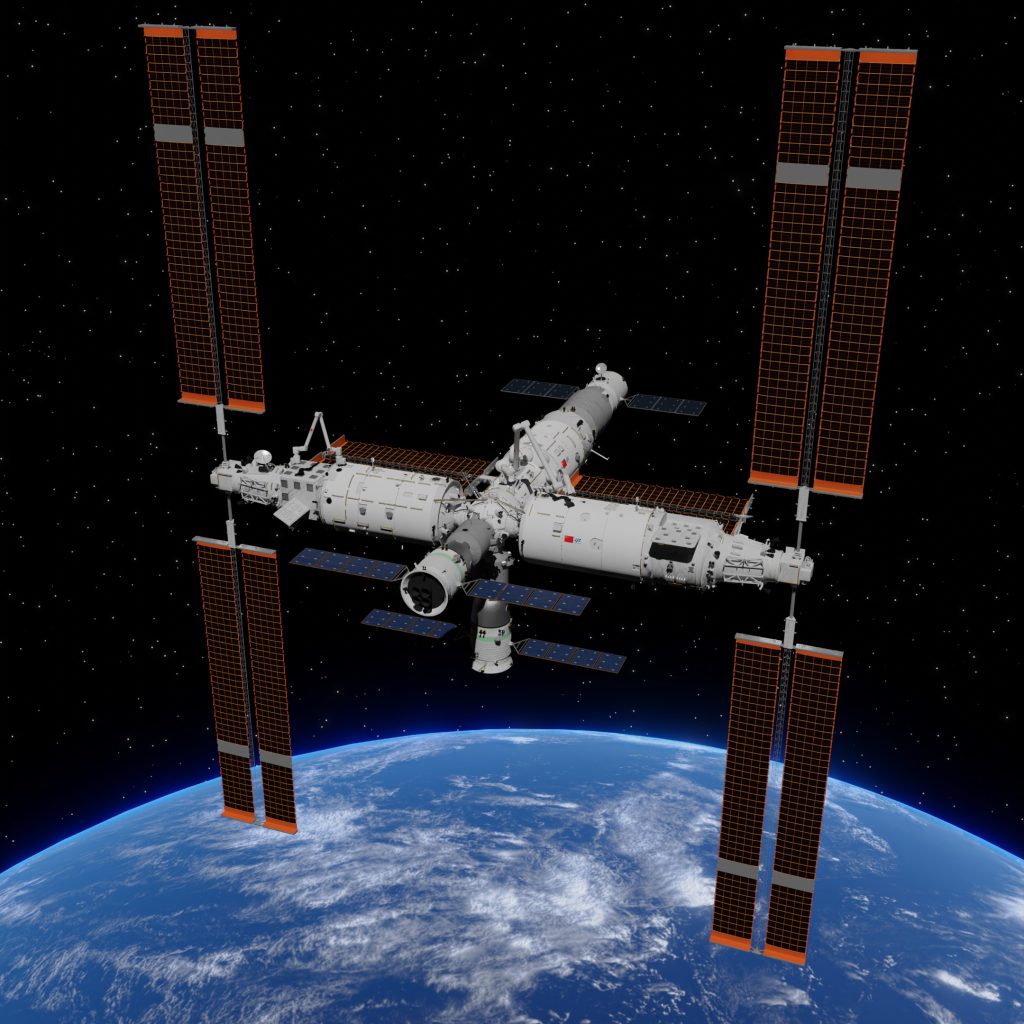
Tiangong Space Station. Image credits: Shujianyang in Wikipedia.
The international context is increasingly tense. Russia has announced plans to deploy space-based missiles to target satellites, while the United States is advancing its own orbital defense systems, such as the Golden Dome. China, meanwhile, is not only fortifying Tiangong but also developing a broader arsenal of space-based offensive weapons. In a recent milestone, the Pentagon reported that China had conducted the first-ever space combat between spacecraft, marking a turning point in the militarization of space.
Opportunities and risks for entrepreneurs
For entrepreneurs and small businesses in the aerospace sector, these developments signal both opportunity and challenge. The protection of orbital assets, the creation of autonomous defense systems, and the management of space risks are set to become key areas for innovation and investment. At the same time, international collaboration and regulation will be crucial to prevent an escalation that could threaten the peaceful use of space.
China’s move to equip Tiangong with defensive robots is just the beginning of a new era in space security. As the militarization of orbit accelerates, technology, diplomacy, and entrepreneurial vision will all play decisive roles in shaping the future of the orbital economy. For those ready to innovate, the next frontier may be not just in reaching space, but in keeping it safe.
Sources:
- El Confidencial – https://www.elconfidencial.com/tecnologia/novaceno/2025-05-29/china-armara-estacion-espacial-interceptar-naves_4140087/

