


The global art market in May 2025 finds itself navigating increasingly turbulent waters, shaped by economic uncertainty, political tensions, and the ripple effects of Donald Trump’s recent trade policies. While the market shows resilience with global sales reaching $67.8 billion in 2024 (a 4% increase from 2023), the landscape is increasingly fragmented and uneven as collectors, galleries, and institutions adapt to a rapidly changing environment.
The art world is feeling the profound impact of the Trump administration’s aggressive trade policies implemented in early 2025. A universal 10% tariff on imports, coupled with higher country-specific tariffs targeting Canada, Mexico, and China, has disrupted the international flow of artworks. Galleries and collectors now face increased costs and logistical challenges when acquiring works from abroad, forcing many to reconsider their acquisition strategies.
These tariffs have particularly affected the high-end market, where international transactions are common. Major auction houses report that cross-border sales have declined by nearly 20% since the implementation of these policies. Smaller galleries with international programs have been hit especially hard, with many scaling back their representation of foreign artists due to the increased costs of importing works.
Market trends in May 2025
In response to economic uncertainty, collectors are gravitating toward established artists like Monet, Picasso, and Warhol, viewing them as safer investments in volatile times. The high-end market has cooled significantly, with auction sales of works over $10 million falling by 39% in 2024. The top 50 lots at auction saw a 30% decline in value, reflecting a more cautious approach among ultra-wealthy collectors.
Meanwhile, private sales have grown by 14%, reflecting a preference for discretion in high-value transactions. This shift has benefited major galleries and auction houses with strong private sales departments, allowing them to maintain revenue despite public auction slowdowns.

Blue acrylic shape on a black background. Image credits: Freepik.
Digital transformation continues to reshape the market, with online sales accounting for 15% of total market value. Hybrid strategies combining in-person and online sales have become the norm, allowing galleries and auction houses to reach global audiences despite travel restrictions and economic barriers. NFTs have evolved beyond their speculative phase, with platforms focusing on quality and authenticity rather than hype. Immersive digital art powered by AR and VR is gaining traction, with artists like Beeple introducing interactive VR-enabled NFTs that offer entirely new experiences for collectors.
Shifting demographics and values
Millennials and Gen Z are becoming dominant forces in the art market, prioritizing themes like social justice, environmental sustainability, and inclusivity. These younger collectors are more likely to discover and purchase art through digital platforms and social media, with 35% relying exclusively on these channels for art acquisition.
This demographic shift is influencing the types of art being created and collected, with growing interest in video art, AI-generated works, and unconventional media. Artists addressing contemporary social issues are finding particular resonance with this new generation of collectors, who view their purchases not just as investments but as expressions of their values and identities.

NFT art representation. Image credits: Freepik.
Environmental concerns are influencing both artistic themes and market practices. Biophilic art, which emphasizes humanity’s connection to nature, is gaining popularity among collectors concerned about climate change. Major auction houses like Christie’s have committed to carbon neutrality, while galleries increasingly highlight their sustainability practices as a selling point for environmentally conscious buyers.
Economic factors and market segmentation
The art market in 2025 shows increasing segmentation, with different price points experiencing divergent trends. While the ultra-high-end market has contracted, works priced under $50,000 have seen robust growth, expanding by 8% in volume and 5% in value over the past year. This reflects both economic caution and the influx of younger collectors with more limited budgets.
The middle market ($50,000-$1 million) continues to face challenges, squeezed between the accessible lower end and the prestigious high end. Galleries operating in this segment report the most significant pressure, with many diversifying their programs or exploring alternative business models to remain viable.
Global hotspots in 2025
Despite challenges, certain cities are emerging as vibrant art market hubs, each with unique characteristics driving their prominence:
- New York remains dominant, with major auction houses setting the tone for the global market through high-profile spring auctions. The city’s robust infrastructure, including galleries, museums, and art fairs, continues to attract collectors and investors worldwide. Despite economic headwinds, New York accounts for 43% of global art sales, maintaining its position as the world’s leading art market.
- Dubai has become a hotspot for contemporary and digital art, benefiting from its tax-free environment and futuristic approach. Events like Art Dubai and the integration of digital platforms have positioned the city as a leader in the Middle Eastern art scene. Dubai’s strategic location between East and West has allowed it to capitalize on shifting trade patterns resulting from new tariffs and trade policies.
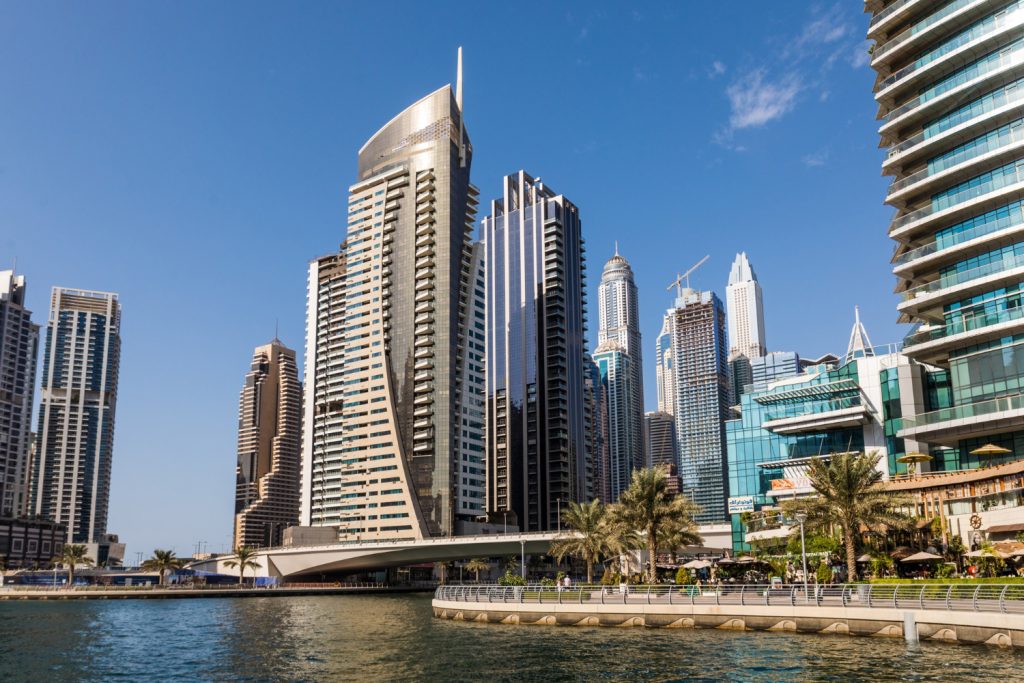
Dubai city. Image credits: Freepik.
- Lagos is gaining recognition for its celebration of African heritage and contemporary expressions, drawing international collectors interested in African art. Events like the Lagos Biennial and Art X Lagos have put the city on the global art map, reflecting growing interest in previously underrepresented regions and artists.
- Milan leverages its cultural legacy and design expertise to become a major player in the global market. The city hosts significant international art events and exhibitions, attracting collectors and galleries with its blend of traditional and contemporary art scenes.
- Hong Kong, despite geopolitical tensions, remains a critical hub connecting East and West. Major auction houses and art fairs, such as Art Basel Hong Kong, continue to thrive, showcasing works from both established and emerging artists. However, political uncertainties have led some collectors and galleries to explore alternative Asian markets.
- Paris is experiencing a renaissance with increased activity in galleries and auction houses, driven by a mix of traditional and modern art. The city has benefited from Brexit, attracting European collectors and dealers who previously focused on London.
Why so much hype in the Arabian Gulf
Georgina Adam, editor-at-large of the Art Newspaper, has explained in a recent Instagram video some of the reasons why the Arabian or Persian Gulf has been gaining so much traction in the art market recently.
The first reason is the least surprising: it is a very rich region, with notable capability for investment, but as Adam later adds, these Arab countries are aware about the finite nature of fossil fuels. “These countries are looking beyond fossil fuels,” she says, and that is the reason why they are also investing in tourism and experiences, with art as one of the main attractive proposals. Adam mentions some new museum openings in Abu Dhabi, as the new Guggenheim or the teamLab Abu Dhabi, a space that mixes museum qualities with entertainment, placed in the known as the “art island”, that is, the Saadiyat Cultural District.
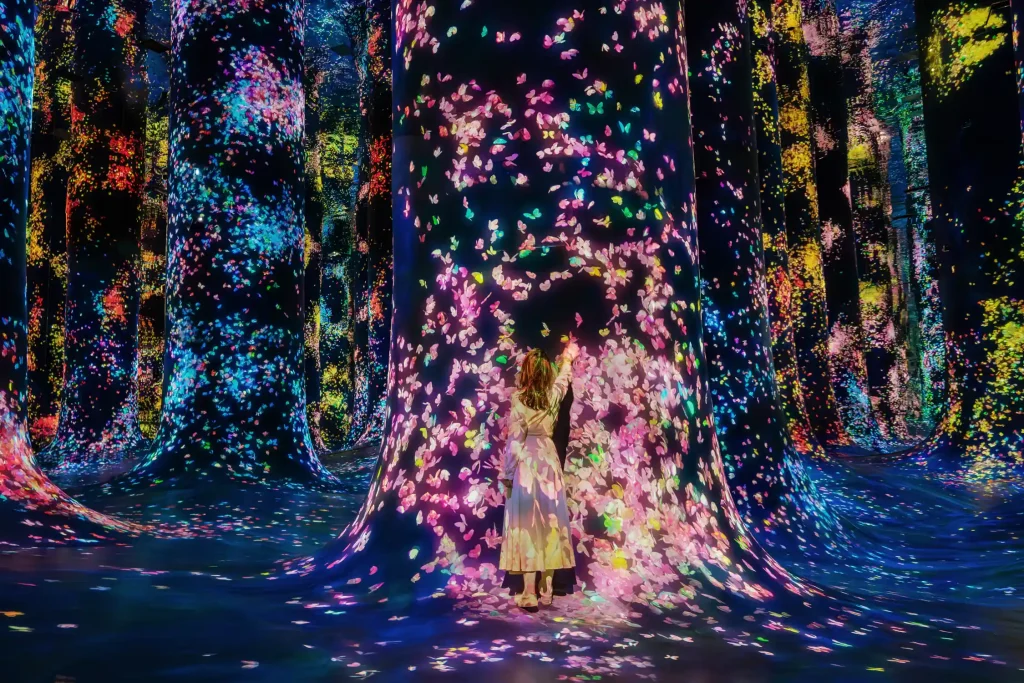
Saadiyat Cultural District, Abu Dhabi. Image credits: teamLab.
The editor also cites the opening of offices from Sotheby’s and Christie’s, the giant art collectors. To these factors, she adds that China’s luxury market has signaled a notable slow down, moving the focus away from Asia into the Arab countries, with Saudi Arabia and the United Arab Emirates looking for diversification.
Adaptation and resilience
As the art world adapts to these political and economic pressures, the market continues to demonstrate remarkable resilience and innovation. Galleries are diversifying their revenue streams, exploring collaborations with fashion, technology, and entertainment industries. Auction houses are investing in digital platforms while maintaining their traditional expertise in high-value transactions.
Collectors are becoming more discerning, taking more time to research and make intentional purchases. A new generation of collectors, driven by purpose rather than prestige, is emerging, signaling a shift in buying behavior that may have long-term implications for the market.
While established centers maintain their influence, emerging hotspots are reshaping the global landscape, creating new opportunities for artists, collectors, and investors alike. This decentralization, accelerated by digital connectivity and changing trade patterns, suggests a future art market that is more diverse, accessible, and responsive to global cultural shifts.
Sources:
- Art Basel & UBS Report – https://www.ubs.com/global/en/our-firm/art/global-art-market-report-2025.html
- Black Art Magazine – https://blackartmagazine.com/art-market-report-2025/
- Robb Report – https://www.robbreport.com.sg/ubs-art-market-report-2025/
- Art Shortlist – https://artshortlist.com/en/journal/article/major-art-market-trends-in-2025
- Art Addict Galleria – https://artaddictgalleria.com/the-major-trends-in-the-art-market-in-2025-digitalization-private-sales-global-shifts/
- Art Rewards – https://www.artrewards.net/editorial/art-trends-in-2025-an-analytical-perspective-on-the-evolving-market
- MyArtBroker – https://www.myartbroker.com/collecting/articles/geopolitics-policy-shaping-2025-art-market
- Aurora & Athena – https://auroraathena.com/journal/insights/art-market-trends-2025/

