

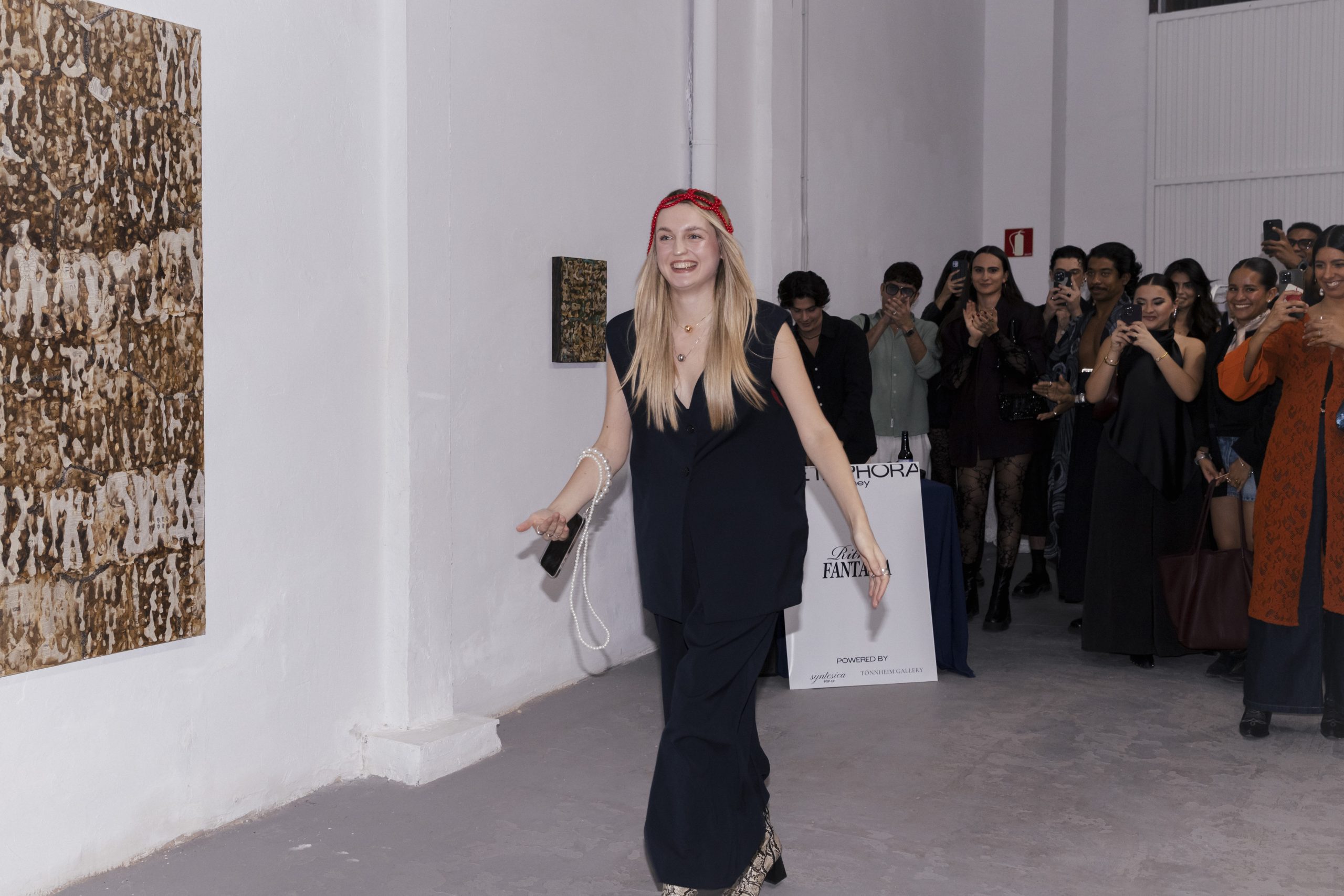

She had to leave her country against her will, and was forced to build a new life for herself on two occasions. But no obstacle in her way has been able to stop Angelina Vlasiuk from believing in her project and moving up in the marketing and fashion industry.
Escaping from the war in Ukraine, she first moved to the Netherlands, to eventually arrive at Madrid after she realized the strong economy couldn’t make up for the cultural disconnect she felt there.
Leading now three different projects related to branding, events and fashion design, Angelina Vlasiuk is ready to make a name for herself in Madrid’s creative landscape, and we have spoken with her in the context of the new clothing collection she just presented in Tönnheim Gallery last Friday in an exclusive event with +100 spectators.
–
Q: Tell me a bit about how your journey in fashion started.
My first idea was accessories, collars, belts, textile pieces. They’re versatile, you can use one accessory with different outfits. I tried one sample, but I was so busy with my marketing career that I never got back to it. Then the war started.
I was living in Lviv, in western Ukraine. When the invasion began, I flew to the Netherlands because friends had a room for me. I’ve always relied on intuition rather than long-term strategy, and obviously, the war wasn’t part of any plan. My life at 24 was perfect; I had a boyfriend, stability, everything. But I had to leave, and he couldn’t come with me because men over 18 weren’t allowed to leave Ukraine. That was heartbreaking. I lost my home, my family, and my financial independence all at once.
In the Netherlands, I decided to close everything in Ukraine, my business, my projects, and start a new life. The stress pushed me to use all my mental and physical resources to rebuild. I wasn’t the kind of refugee to just wait for the war to end; from the second week, I started looking for a job. At one point, I worked for just 100 euros more than government help. I pushed myself really hard.
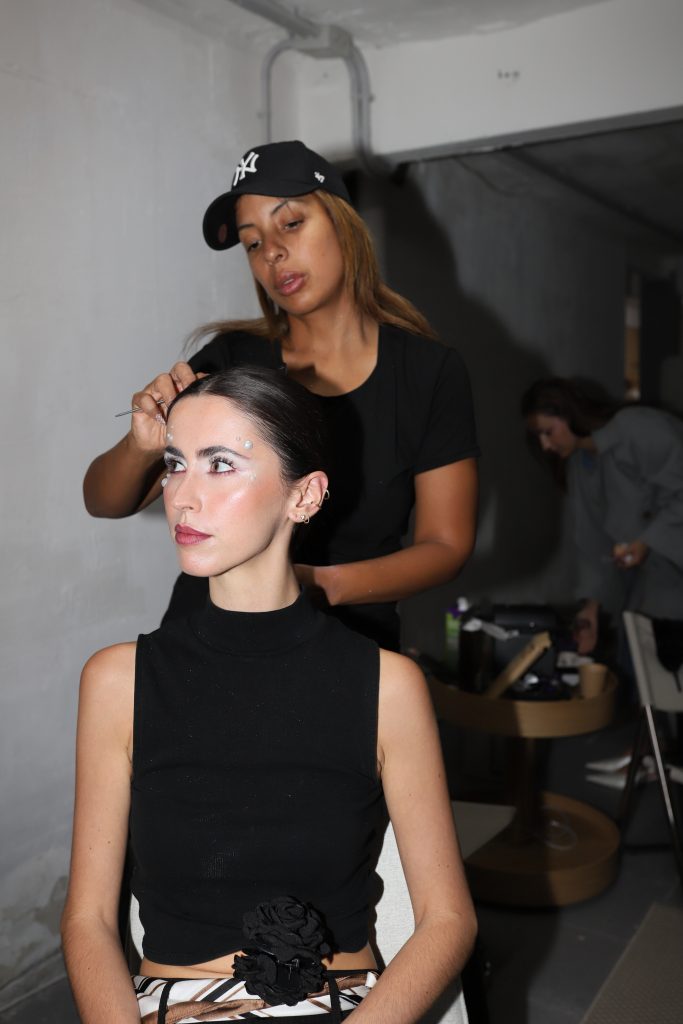
Presentation of the new collection “Metaphora” by Angelina Vlasiuk. October 17, 2025.
Q: You were just trying to have a normal life again.
Yes, it was a good decision. I worked in a showroom of independent Scandinavian brands. They paid little, but it was a fashion brand, and I learned a lot about administration, communication, and talking to people. Hard work, but really worth it.
I tried every way to find a job in the Netherlands, posting on LinkedIn, applying to creative agencies. One guy invited me for an interview, but then told me, “This might sound racist, but we’re not going to hire you because you’re not Dutch.” And maybe it was racist! I was shocked. It left me traumatized. I was still in survival mode.
Three months after arriving, in June 2022, I started working on my brand Say Hey. I wanted something that connected me to Ukraine and shared its culture in Europe, not in a victimising or aggressive way, but showing the best of it. I found tailors in Ukraine, learned more, and used my background in marketing and art to design the collection. I sketched, painted, made mood boards, and used saved images for inspiration.
The first collection, “Symbols of Ukraine,” was inspired by Ukrainian herbs and flowers. Ukraine’s culture is so rich and diverse; different regions, handmade rugs, songs, poems, all with hidden meanings. It expressed Ukrainian identity and beauty, but not with victimhood.
The pieces were made from linen, named after herbs or flowers, marigold, poppy, guelder rose, and designed to be reversible and functional.
Q: How difficult is it to be producing in Ukraine right now, with the war ongoing?
My town is in western Ukraine. The worst fighting is in the east, where it’s really intense with drones, bombs, everything. In the central and western parts, it’s calmer, but there are still rockets and drones. You’re never 100% safe, even near the Polish border, where my hometown is.
I was in Ukraine about a month ago, and for the first time in Lviv I experienced an attack. I was in a shelter with my friend, hearing the drones and feeling the building move, it was insane. I got really traumatised; now every time I hear helicopters, I get triggered, like “what’s going on?”
When I was home, near the Polish border, I woke up one night to the sound of drones flying right over my roof. Some Russian drones even crossed into Poland, so you’re never really protected. The only good thing is that in the west it happens less often, maybe every two or three weeks.
But people there still try to live a normal life. I don’t know how they manage, but they do.
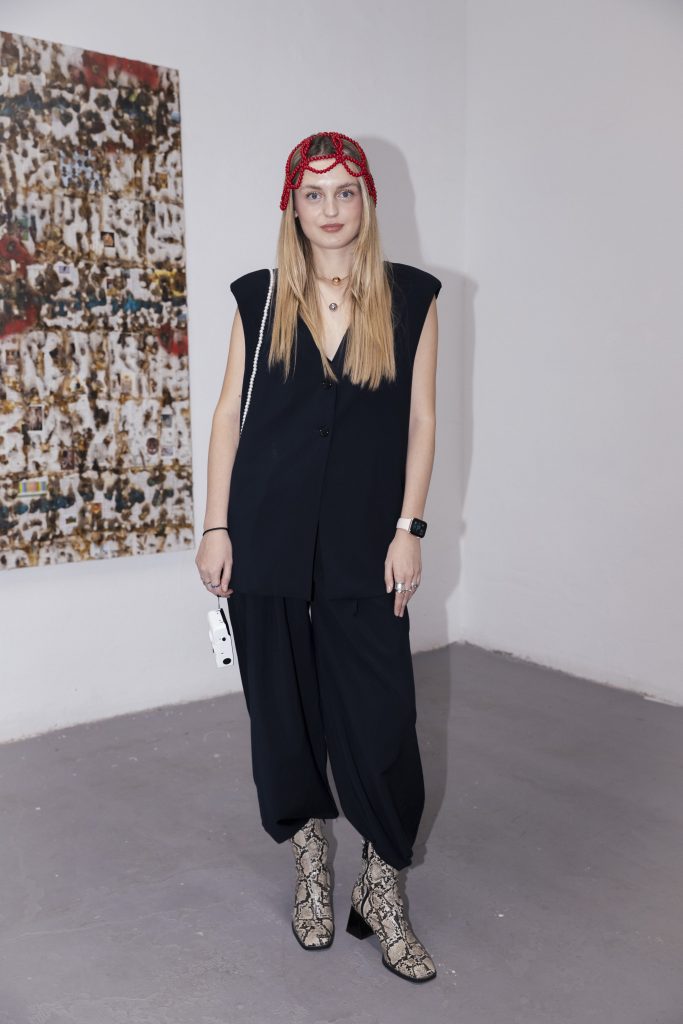
Angelina Vlasiuk presenting her new collection in Tönnheim’s Gallery. October 17, 2025.
Q: And is it very mentally difficult…
It’s very mentally difficult because you cannot just freeze and wait, it’s killing you. At the same time, you have to pretend everything is normal, even though it’s not.
I have a tailor in my hometown. I buy all my fabrics in Ukraine to support local companies. I draw sketches, finalize models with her, she makes samples, and we try a few sizes. It’s a small, made-to-order project. I want to support her so she can work.
During winter there are electricity cuts. Businesses have generators and batteries to keep working. Now, with attacks on electricity, the situation is worse, people can go without water and power for 4–8 hours a day. But no one talks about it.
Q: Would you like to keep all your production in Ukraine in the future?
My production is entirely based in Ukraine. For the future, I see three options. First, keep everything in Ukraine. I’m ready to expand, I’m talking with B2B contacts, sales agents, and manufacturers who can produce up to 500 pieces per month. Costs and taxes are manageable, so this is my main plan.
Second, I could open a studio or small production here Spain and hire Ukrainians who want to work for me, keeping the focus on supporting my country.
Third, I could use manufacturers in Portugal, which is sustainable and ethical. I would never go to Bangladesh or China, I see many brands doing that, but it doesn’t make anything better.
Preferably, I want to keep most of the production in Ukraine. If needed, I could open a studio here, but my priority is to grow the business while supporting Ukrainian production.
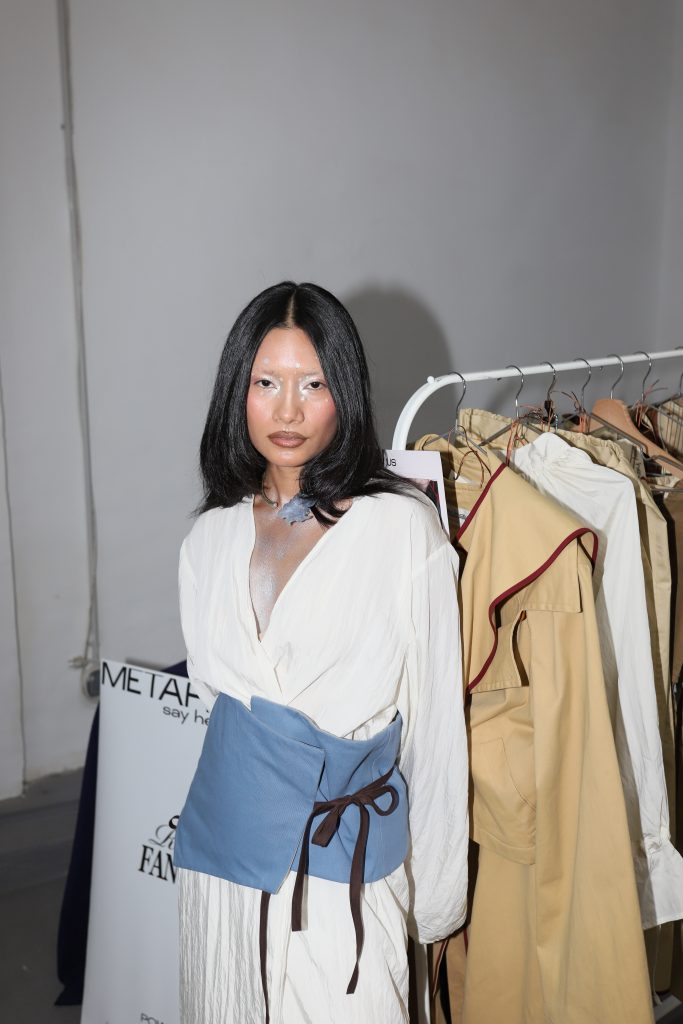
Presentation of the new collection “Metaphora” by Angelina Vlasiuk. October 17, 2025.
Q: So tell me more about the Dutch market
I was trying to build my brand while also building my life in the Netherlands, social life, work, everything. Selling in the Netherlands was easier than in Spain: people have more money and care more about handmade, sustainable fabrics. Within a year and a half, I had good sales.
But I struggled to build a personal life there. I funded the business entirely myself, no help from family. I started working young, helping my mom and grandmother, paying their bills.
In the Netherlands, I faced an existential crisis. I couldn’t build a life as a person, not just a business. I encountered racism, cold mentality, and difficult weather. For about a year and a half, everything I did was just survival mode, trying to piece life together. I worked events, markets, and sales step by step, but my income wasn’t enough to live comfortably.
Q: At some point you moved out of your friend’s house and I guess the rent was very expensive as well…
Everything became too much, especially without a proper paid job and after experiencing racism. I felt, okay, this is not my place, even though I tried very hard.
One of my friends, a guy from Iran who fled war 20 years ago, told me, “I know how hard you tried; you deserve to leave and live a better life.” That was a turning point for me. I realized that even though I was in a stable country, I wasn’t truly alive. I had been in full survival mode, and that’s when I really understood what a dull life feels like, and what life really is.
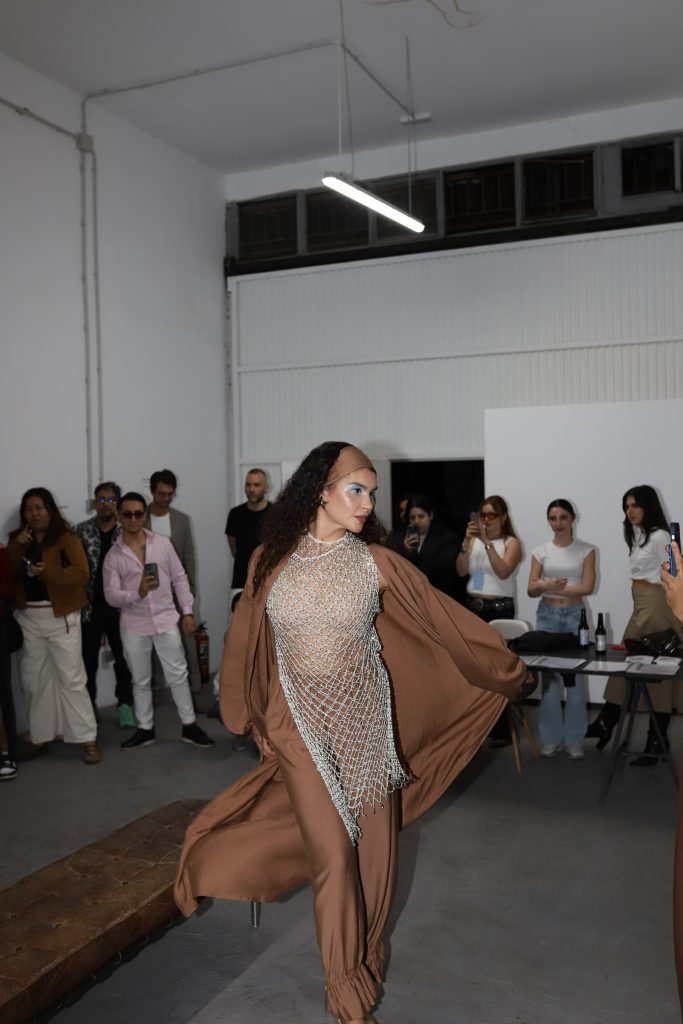
Presentation of the new collection “Metaphora” by Angelina Vlasiuk. October 17, 2025.
Q: It’s funny because in one sense you have this good economic environment to sell as people have money and you have clients, but the rest is failing.
Yes, it’s important to find balance. If I’m not okay mentally or financially, I can’t think about creating anything. The economy in the Netherlands is good, but the culture didn’t work for me. I didn’t move there by choice, and there were a lot of factors affecting it.
Q: And at some point you said ‘I need to leave the Netherlands’, how does Spain enter the equation?
This was the craziest idea in my life. At school, I learned Spanish for seven years, but ten years later I barely remembered anything. My logic was: I need a warmer country, and maybe Spanish would be easier to pick up. Other languages like German or French weren’t appealing.
I visited Barcelona and Madrid for two weeks each to decide. Barcelona wasn’t for me, too many tourists, unsafe, I even saw three robberies in one day. I read expat stories too; people change every six months, and it’s hard to build long-term relationships. Then I moved to Madrid.
Q: Did you also think you would find a more open culture in Spain?
Yes. At first I didn’t know a single person, zero. I rented an Airbnb, and everything started falling into place from the second day. I met my close friend, a Spanish woman, who became my first really close connection here.
I quickly found an apartment and met many people. Within two weeks, I already knew about ten people I could rely on. Compared to the Netherlands, where it took two years to build a circle of ten people, it felt like the universe was aligning. All these small factors made me realize Madrid was a good match for me to live.
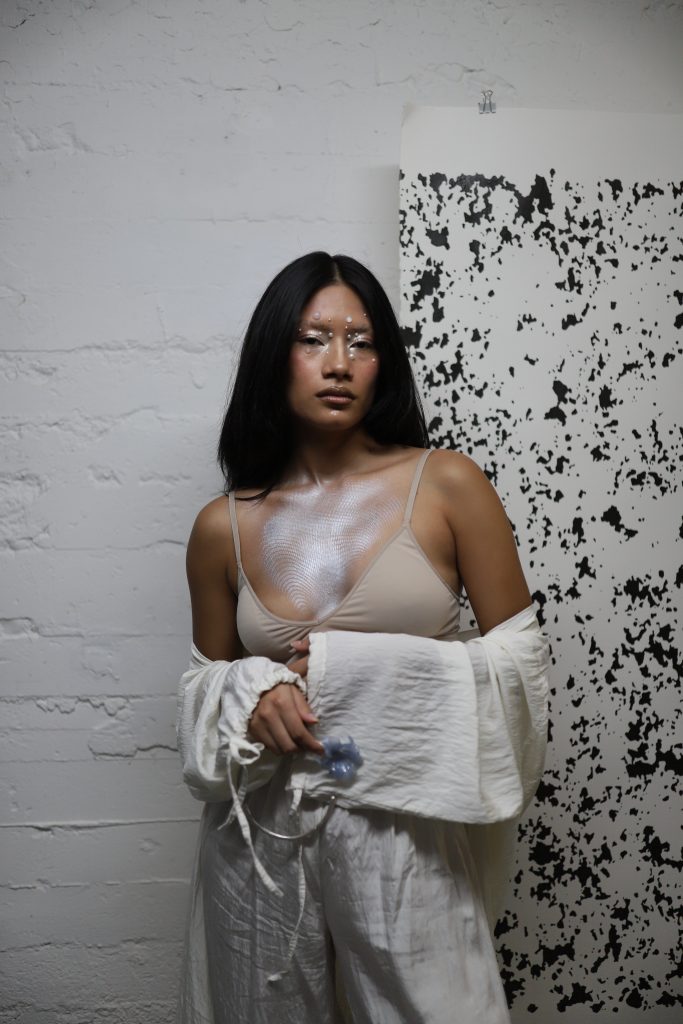
Presentation of the new collection “Metaphora” by Angelina Vlasiuk. October 17, 2025.
Q: And that you are in Spain, how long have you been here?
Sixth of December will be two years.
Q: And so far, are you happy? Do you think it was the right decision to come here?
Mentally, it’s way better here. I have a lot of friends, living is cheaper than in the Netherlands, and the weather is nice. I’ve learned a lot from Spanish culture, slowing down, enjoying life, not just hustling all the time. I’ve learned to enjoy, not only work toward goals constantly.
For clients, I sell through the internet. At first, I focused on the Spanish market, trying to understand it and attract Spanish customers. During my first year, I did five pop-ups and events across different neighborhoods in Madrid to better understand my clients. Spain has a very specific fashion culture, and that gave me a lot of insights.
Q: Before coming here, did you think of Spain or Madrid as a fashion industry reference in the world as Milan or Paris could be, or not so much?
I didn’t know anything about Spanish fashion or culture at first, but now I understand much more and try to understand my customers. Spanish people make up about 20% of my clients; mostly it’s expats. At first, I didn’t speak Spanish, but now I can. Some middle-aged Spanish people also support my brand and really value it, which is interesting to discover and talk to them about.
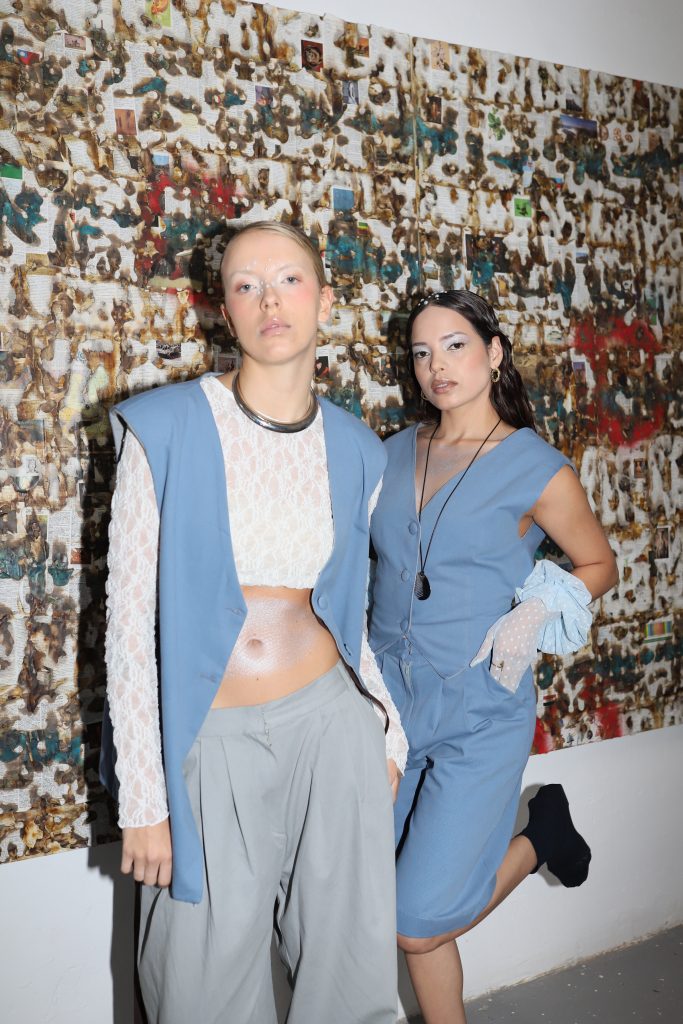
Presentation of the new collection “Metaphora” by Angelina Vlasiuk. October 17, 2025.
Q: These expats are mainly in Spain or are you shipping to other different countries?
Yes, to other countries as well. Right now, I have one project representing me in Lisbon and one in Barcelona. I also try to participate in events in the Netherlands and France, and ship there when possible. But my main audience is expats in Spain.
Q: So you started with Say Hey, but then you went in with Syntesica and then the Syntesica agency, and you are also using these different brands to create synergies between them. How do you think that strategy of diversification has helped you in opposite of deciding to stick to only one line?
I think this is the best decision I’ve ever made businesswise, but you need to be very brave. When I did my first Syntesica pop-up in March, I can’t even believe now how I managed the venue, costs, and brands without going into minus. I saw a gap in the market and an opportunity for my brand to reach more people.
By then, I understood the market and business models, and having participated in other pop-ups, I realized how much skill I could offer other brands. Syntesica is a mission for me: supporting other brands, giving them a place to showcase, and creating a culture and environment for growth.
It also naturally led me to start my agency, because brands began asking me for help developing theirs. Now, if something happens with my brand production, I still have the agency income, and vice versa. I’m still surprised I managed it, but it comes from intuition and my entrepreneurial mindset.
Q: Your brand is environmentally friendly, both for the natural environment but also in the human side since you reject using sweatshops. In your view, what place will environmentally friendly fashion hold in shaping the future of the industry?
I think the potential is in storytelling and experience before production. On presentations, I share my story, and people are shocked, they want to support me. Big brands like Zara also understand this, they create experiences to connect with customers, because the culture is changing. Independent brands struggle, but storytelling builds relationships.
That’s why I do events: people see, touch, and experience my brand before it launches. Even as a small brand, originality and story help people notice and support me. Sustainability matters too, I would never use polyester, even if others do or it helps to recuse the cost, plastic free approach is my core value..
The game favours those with money, but strong stories and values create opportunities. It’s a dynamic world, and many times I thought about stopping, but my idea, vision, and passion make me fight for it.
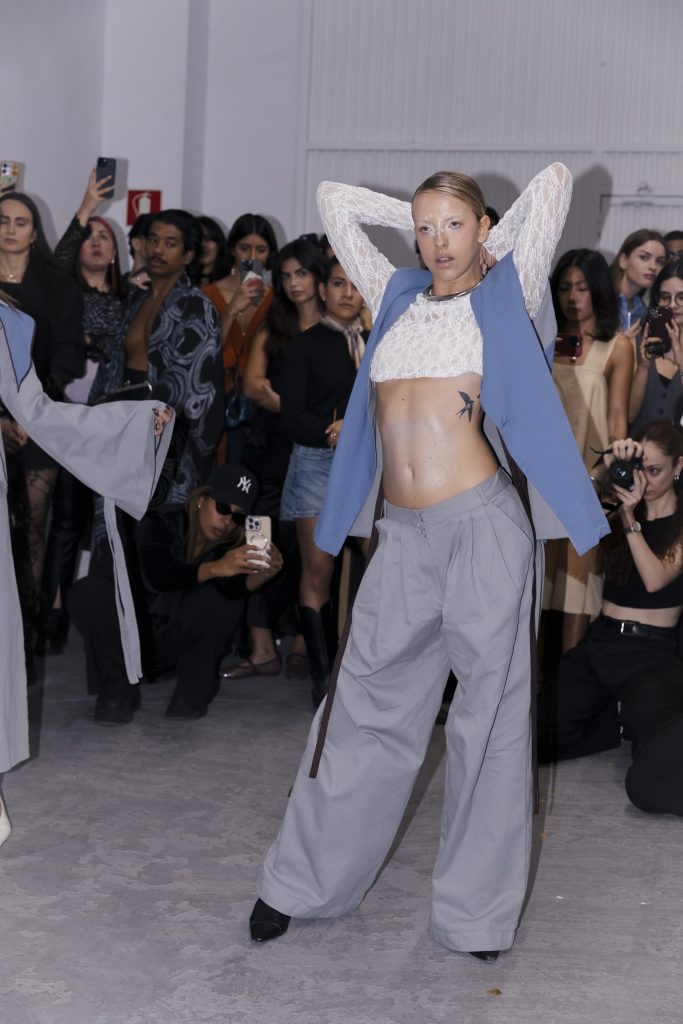
Presentation of the new collection “Metaphora” by Angelina Vlasiuk. October 17, 2025.
Q: Would you like to open a physical store in the future, or do you feel that staying fully digital is sufficient – and perhaps even the way forward?
I would love to have a store, this was my dream back in the Netherlands. It’s very expensive, so I’m working toward it. That’s why I created Syntesica: I want a multi-brand store with brands that share the same values. I want to support emerging brands with storytelling and values, helping them succeed or at least reach one level higher.
Q: What characteristic do you think is essential for a marketer or for someone working in the fashion industry to have right now?
I’d say responsibility is essential. You need to own your goals and decisions, no one will achieve them for you. In fashion or marketing, things don’t just fall into place; you have to act, gain experience, and form your own point of view. Relying only on external advice or trends isn’t enough. Responsibility, initiative, and personal perspective are key.
Q: Given your business is international, and also considering the situation in Ukraine right now, are you using any digital payments solutions?
Ukraine is actually very digitally advanced. We have an app called “DIA” where all your documents are online, you can manage taxes, registrations, even get married or divorced from your phone. For banking, I use Monobank, which is really user-friendly. My Ukrainian business is fully managed online, and for payments I use Shopify, which goes directly to my entrepreneur account. Thanks to this, I only need to go to Ukraine about once a year.
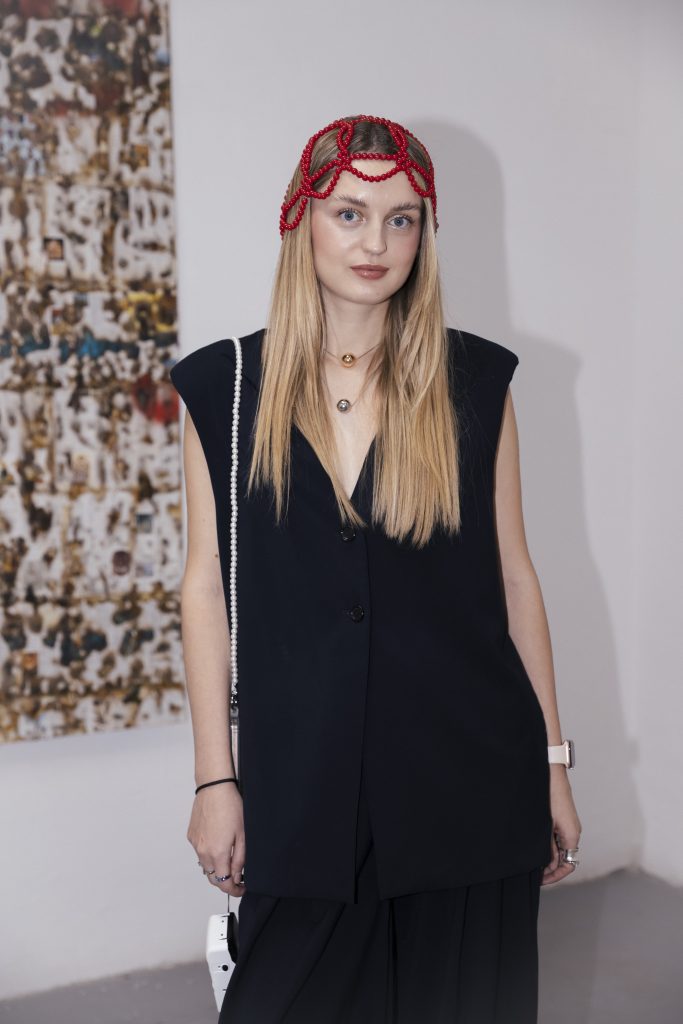
Angelina Vlasiuk presenting her new collection in Tönnheim’s Gallery. October 17, 2025.
Q: Let’s talk about the new collection that you presented at Tönnheim Gallery last week.
The collection is called “Metaphora”. It reflects the idea that one thing can have multiple meanings. My brand focuses on functional clothes for self-expression, so all pieces in this collection are reversible or transformable. Each piece can be styled in different ways, letting the wearer explore multiple meanings and variations depending on their imagination.
Q: I see a lot of blue color in the mood-board. What is the role of that color here?
Yes, lots of blue and grey, this came from my time in Tenerife. The north of the island has dark blue water, grey skies, and volcanic stones, which influenced my sketches. Beyond aesthetics, my collections carry philosophy and spirituality, Buddhism, poems, ideas, so each piece has multiple meanings. That’s why every garment can take time to explain; it’s about self-expression, transformation, and deeper inspiration.
Q: So it’s a form of taking action – not through aggression in response to the war in Ukraine, but in a more peaceful and constructive way?
Yes, it’s about acting positively, not aggressively, to make the world better. Aesthetically, Tenerife inspired it; philosophically, Buddhism, karma and spirituality. I practice yoga and meditation, these ideas shape my art. For me, it’s a mix of nature, Tenerife, philosophy and Buddhism.
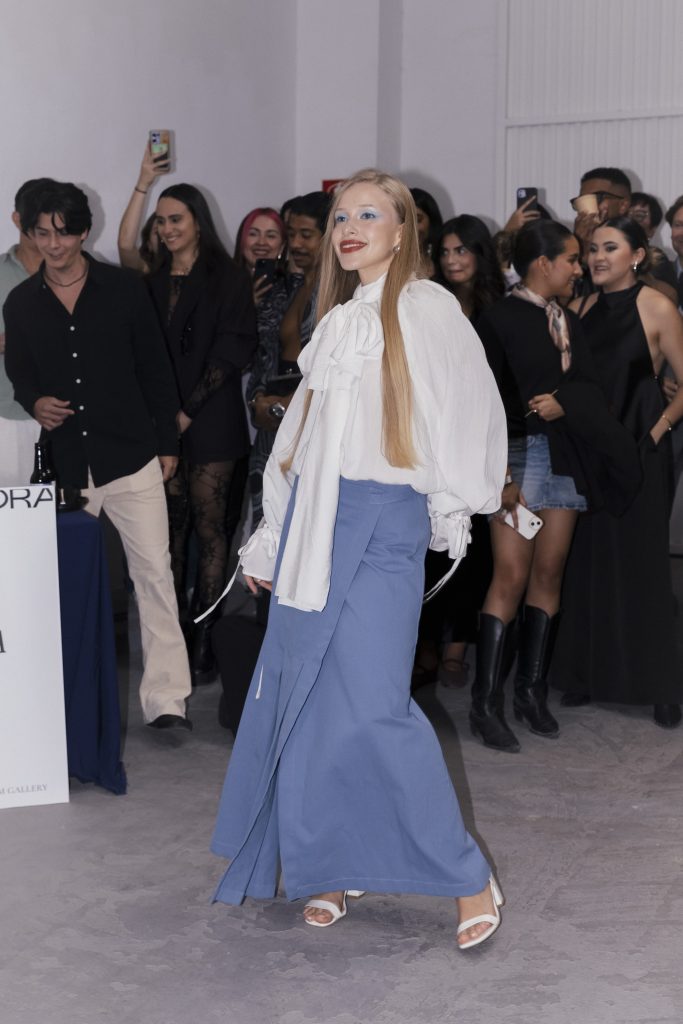
Presentation of the new collection “Metaphora” by Angelina Vlasiuk. October 17, 2025.
Q: Could you tell me an ideal situation in which you could wear some of the clothing from this collection?
You can wear pieces from this collection for different occasions, work, brunch with friends, evening events. Some are more official, some more casual, but everything is reversible or transformer, so each person can be an artist with their look. I added blouses this time, considering autumn–winter and Spanish market tastes, but keeping my calm Tenerife-inspired palette.
All pieces are made from fabrics, fully versatile, and my goal is for people to buy one thing and use it as long as possible. Transformer clothing is my place, it’s intuitive, a challenge, and a way to let people express themselves freely. For me, life is a verb; everything moves, and clothing is part of that expression.
Q: That’s a very Buddhist concept, that everything is changing all the time.
Yes, exactly. You either move through life or stay stuck. If you stay still, you don’t reach anything. I see it even with the war, people either freeze, run, or fight. For me, it’s always about doing, taking action. That’s how I’ve gotten to where I am now. Three years in, and I’ve already learned so much.
Q: What are some fashion brands that you are interested in right now, that you think are doing things good?
For big brands, I’m inspired by Jacquemus and Loewe, they do luxury differently, more unique. But I also follow small brands doing cool stuff. From Ukraine, Shypelyk has always inspired me, and Ksenia Schneider does amazing upcycled denim. I love brands with strong stories and creative concepts.

