

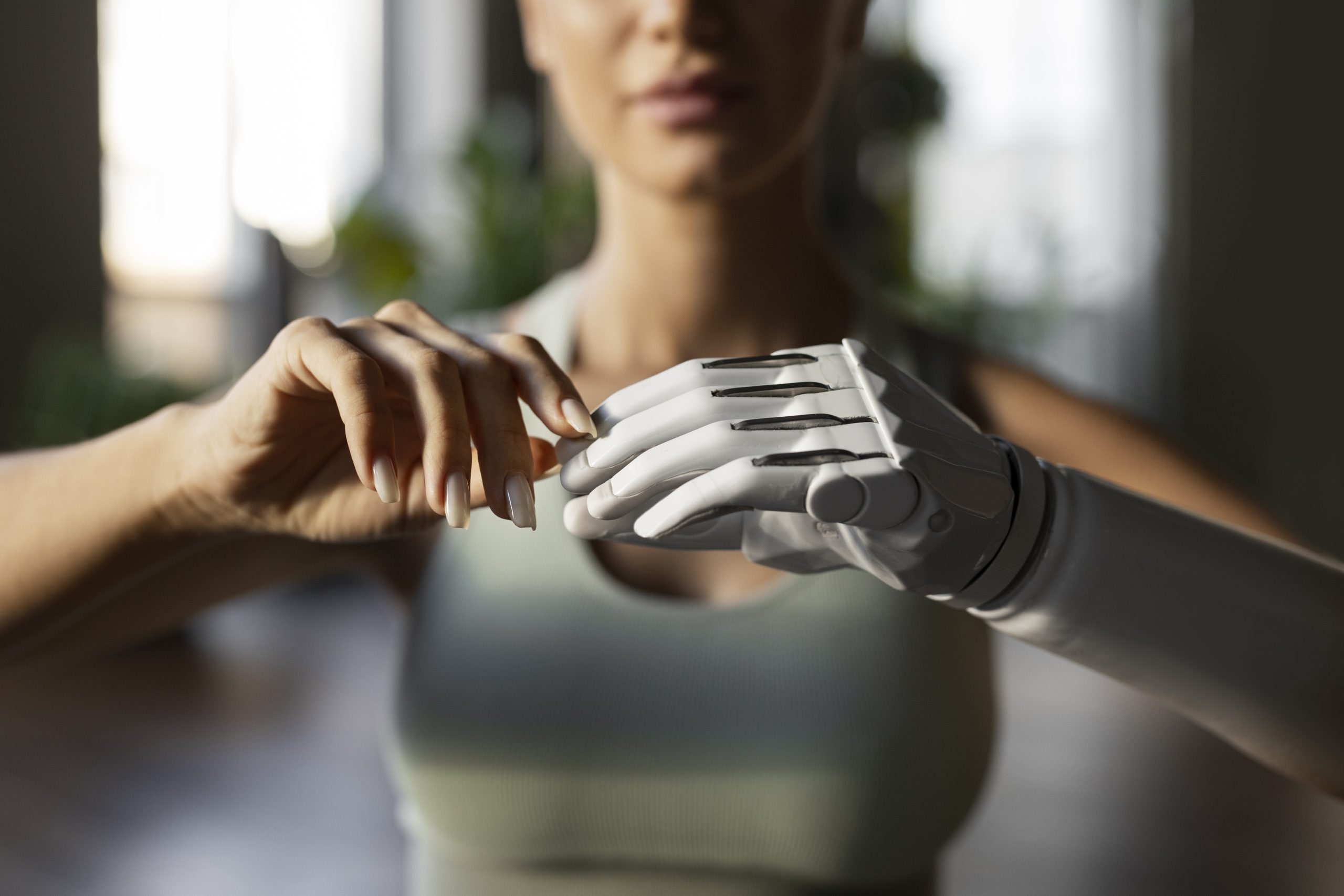

Entrepreneurship has entered a new era. It’s no longer just about innovating, but about co-creating alongside artificial intelligence. In this decade, the most visionary founders aren’t replacing people with algorithms—they’re building alliances between humans and machines that redefine what it means to create, decide, and lead.
According to PwC’s Global AI Report 2025, 63% of tech startups already use artificial intelligence at some stage of their development cycle—from ideation to market validation. But what’s most interesting isn’t the technology itself, but how human teams are learning to work with it.
From Automation to Augmented Intelligence
For years, the debate around AI focused on job replacement. Today, the spotlight has shifted toward cognitive collaboration—the human ability to leverage machines as strategic partners.
Artificial intelligence no longer just performs repetitive tasks; it now amplifies creativity, detects invisible patterns, and optimizes decisions in real time. In emerging companies, this translates into hybrid teams where humans and algorithms co-create products, strategies, and experiences.
Examples of this symbiosis can be seen in startups like Runway, which uses AI to democratize video editing, or Synthesia, which generates realistic virtual presenters from text. In Latin America, projects like Aiva Health (Chile) and Klu (Colombia) show how regional talent is using AI to solve human problems—not replace humans. The true value lies in integrating technology as a work companion, not a threat.
New Ways to Create: Hybrid Startups
The new wave of entrepreneurship is not limited to programmers or engineers. AI has opened the door for designers, communicators, and creative professionals to take an active role in tech innovation.
Tools like ChatGPT, Claude, Midjourney, and Gamma enable the creation of prototypes, content, and presentations in minutes—narrowing the gap between idea and execution. This “democratization of development” is giving rise to a new kind of entrepreneur: the hybrid creator, who blends human intuition with algorithmic precision.
According to MIT Technology Review, startups that integrate AI from the design phase are 40% faster to launch products and 30% more efficient in operational costs.
But beyond efficiency, augmented intelligence is driving a new work ethic—one that puts human creativity back at the center of the productive process.
Leadership in the Human–Machine Collaboration Era
Leading teams in this new age requires a paradigm shift. The founder of the future isn’t just a manager of human or financial resources, but an orchestrator of intelligences—human, digital, and emotional.
Companies like DeepMind and Anthropic are adopting collaborative leadership structures, where decisions are validated through predictive models, but human intuition remains decisive. In Latin America, accelerators such as 500 Global and Seedstars are already training entrepreneurs to integrate ethical and responsible AI into their business models.
As we highlighted in our analysis on sustainable leadership and entrepreneurial purpose, the new leadership is measured less by control and more by the ability to guide complex systems through uncertain environments.
In this context, empathy, vision, and adaptability are as valuable as technical skill. The challenge is not only to manage algorithms but to humanize technology.
Ethics, Creativity, and the Control Dilemma
Every technological revolution brings ethical dilemmas. AI raises deep questions about authorship, privacy, and creative autonomy. Who is the author of an AI-generated idea? How far should we delegate decisions to automated systems?
Pioneering companies are experimenting with explainable AI models, where each algorithmic decision can be traced. This not only builds trust but strengthens the human role as curator and guardian of meaning.
According to The Economist Technology Quarterly, the next frontier won’t be total automation, but ethical collaboration between humans and machines. Companies that balance innovation with responsibility will be the ones to stand out.
A Shared Future: The New Entrepreneurial Revolution
The future of entrepreneurship doesn’t lie in extremes—neither in fear of automation nor blind faith in technology—but in the intelligent symbiosis between both worlds.
Tomorrow’s startups will be living ecosystems where AI amplifies human talent and frees time for creativity, strategic thinking, and purpose. Entrepreneurs who understand this dynamic won’t just be more productive—they’ll be more human.
Major transformations don’t arise solely from technology but from the vision and courage of those who use it to improve the world.
The future won’t be dominated by machines or humans, but by alliances between both—built on a single principle: innovating to live better.

