


Many companies, especially software development enterprises but in other sectors as well, are integrating artificial intelligence into their workflows, but it can happen that the results are not as good as expected. That is possibly because your company is not integrating AI efficiently. This was the basic idea of Jose Palazón’s speech during the Metaworld Congress (Madrid 2025), in which he took the chance to show how their product, called Neo, helps introduce AI in a holistic way that truly speeds things up.
Palazón is currently Chief Technology Officer (CTO) of Sagittal, having worked in the same role for several businesses in the past. He explains that an uninformed inclusion of AI can produce very slow workflows. For example, a person introducing information in a text box, receiving a response, and then introducing info again in the box is not very efficient.
Not only this scenario can happen, but also the case in which the different teams in a company need to constantly explain the AI about the new advancements that this other team did, to upgrade its knowledge.
Especially in a software development team, in case you have a software company, or it has a strong team dedicated to this, it’s vital that the AI we use can understand by itself when new teams make changes or improvements, even though they work separately (as it is usually the case, having marketing, designers, development, product managers, etc, working on their own, with excessively long meetings happening from time to time to get on the same page).

Jose Palazon in the Metaworld Congress 2025. Image credits: Enterprises&More.
The CTO claims to have the solution for this chaos: Neo, the artificial intelligence sold by Sagittal, is an AI assistant that integrates in all departments, and can automatically recognize what each team is working on, and takes that data into account when offering suggestions to every worker. This is meant to make everything faster, as each individual does no longer need to manually update the AI database with the work done each day.
The AI can feed on the digital software that teams use to work (GitHub, Figma, Google Docs, etcetera), to automatically upgrade its knowledge about the status of the project, being able to propose the better suggestions at any given time.
The bureaucracy of software development
Citing the well-known Waterfall Methodology, and reflecting on the usual conflicts that make developers unable to deliver on time, Palazón criticizes the often inefficient processes that companies follow when developing software.
A tool like Neo helps everyone involved in the project to be on the same page at every stage, erasing the need for some meetings or extra work whose whole purpose is to share the progress everyone has made, or the problems that have arisen. “Neo drastically reduces project timelines, allowing teams to adopt GenAI without disruptive transformation or reorganization”, as they state in their webpage.
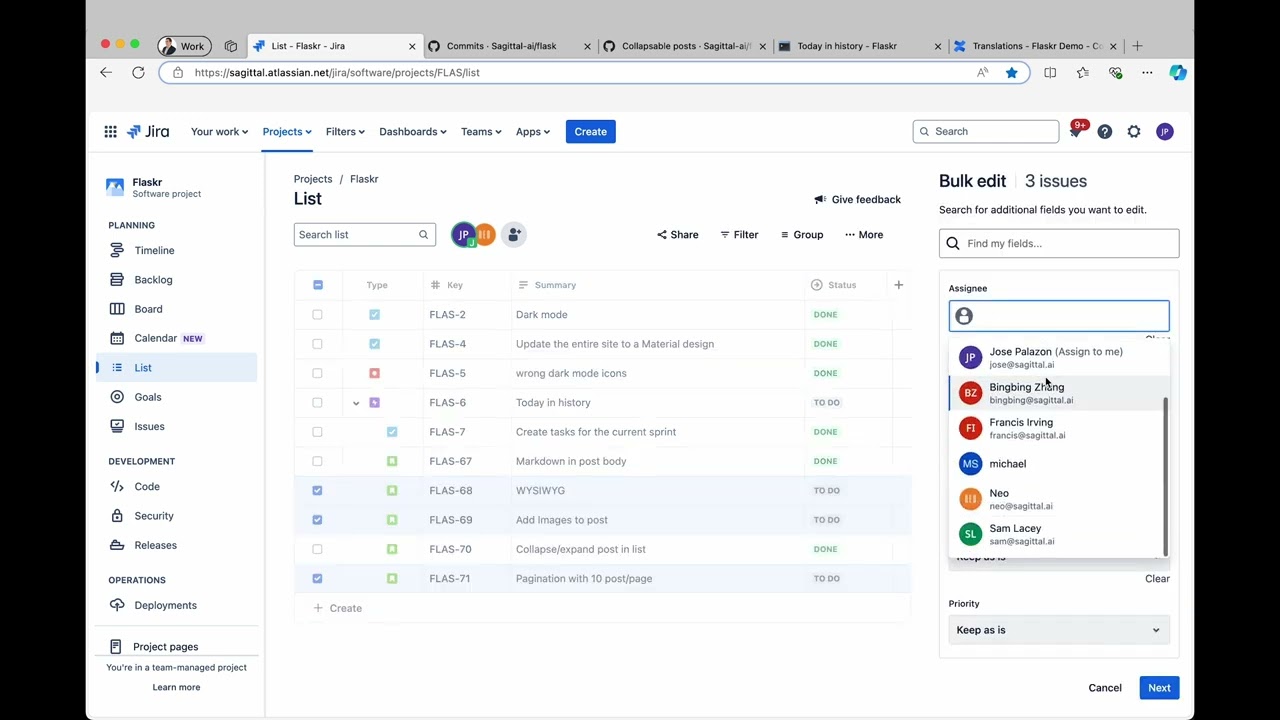
Neo promises to streamline software workflows by generating pull requests from tickets, addressing code review comments, maintaining coding styles, completing PR summaries, performing code reviews, fixing CI/CD errors, writing unit tests, creating architecture diagrams, automating ticket management, and breaking down complex tasks into trackable components. All of this, while integrating seamlessly with existing project management tools and development processes.
This is what Palazón had to say in this technology-focused Congress, hoping to make things better for developers struggling with bureaucracy that diminishes the time they have to actually code.

