

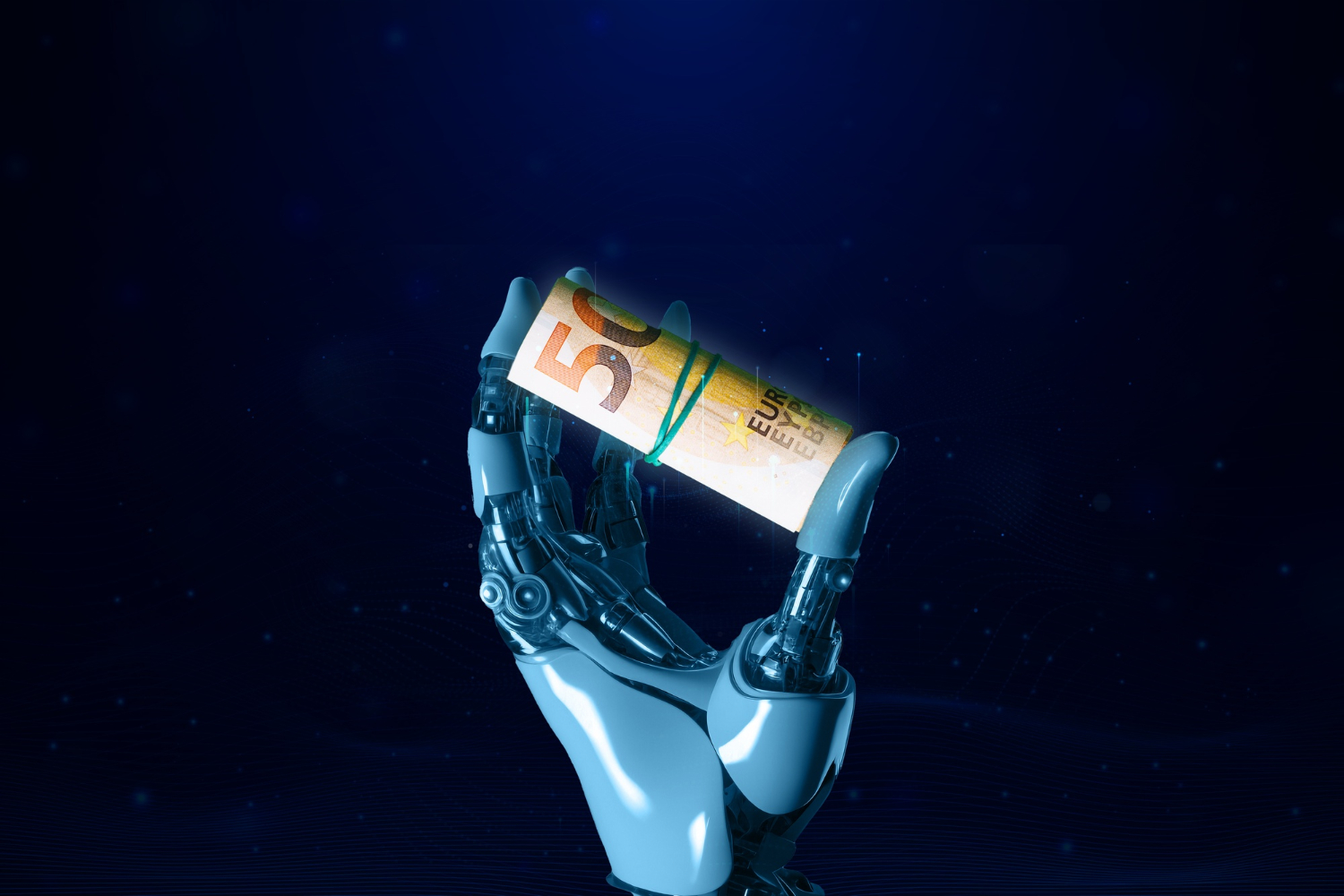

Optimism is dizzying. Every week, an AI startup announces a funding round with a valuation that defies traditional logic. Giants like Nvidia are breaking historic stock records, and terms like “generative AI” or “LLM” have moved from technical jargon to everyday investor vocabulary. This investor frenzy, focused almost exclusively on AI’s potential, has revived a ghost many thought long gone, the dot-com bubble of 2000.
The question is no longer whether artificial intelligence will transform the economy, but whether the current euphoria is creating real value or inflating a speculative bubble about to burst. Analyzing present signals is key to understanding whether we face a sustainable revolution or the threshold of a painful correction.
The digital gold rush
The most obvious parallel with the 2000 crisis is the disconnect between company valuations and actual revenues. Many AI startups, despite lacking a consolidated product or profitable business model, achieve “unicorn” status (valued at over $1 billion) in record time. According to Bank of America analysts, while enthusiasm is high, monetization of generative AI is still in its early stages, creating a clear risk of overvaluation.
This “gold rush” is driven by venture capital, which, fearing missing out on the “next big revolution,” injects billions into the sector. The problem is that many investments are not based on solid financial metrics, but on the promise of exponential future growth. As industry experts warn, when capital is allocated more by FOMO (Fear Of Missing Out) than fundamentals, market foundations become unstable.
Infrastructure as a pillar
Unlike the 2000 dot-com bubble, where many companies lacked infrastructure, the AI revolution rests on real, profitable tech giants. Companies like Nvidia, which produces the GPUs essential for training AI models, and major cloud providers such as Amazon, Microsoft, and Google, drive this boom. Their profits are solid and their technology tangible.
However, this creates a vulnerability. Extreme dependence on a very small number of hardware providers, especially Nvidia, creates a bottleneck. Any disruption in supply chains or potential chip market saturation could have a domino effect across the AI ecosystem. Concentrating so much power in so few hands is a systemic risk that cannot be ignored.
Is this time different? The real-world utility factor
Supporters of the “this time is different” thesis argue that, unlike many dot-com companies that sold hype, AI is already generating real, tangible applications. From optimizing industrial processes and discovering drugs to content creation, AI is no longer just a promise but a tool that adds value and boosts productivity.
History, however, offers lessons. The arrival of the internet was also a real revolution, yet it did not prevent the market from collapsing under excessive speculation. According to economists at Allianz, the key is distinguishing the long-term transformative potential of a technology from short-term speculative euphoria. That AI will change the world does not mean that every company riding the wave today will survive.
Navigating tomorrow’s uncertainty
It is impossible to predict with certainty whether the AI bubble will burst suddenly or slowly deflate to adjust to reality. What is certain is that the current market shows clear signs of overheating. Sky-high valuations, speculation-driven investment, and concentrated infrastructure power are warning signs.
Perhaps the real question is not whether we are in a bubble, but how big it is and which sectors it will drag down if it bursts. For entrepreneurs and investors, the moment calls for a mix of optimism and caution, betting on real innovation and solid business models without being blinded by the shine of a potentially dangerous speculative bubble.
Sources:
- El Economista: ¿Burbuja de la IA? Bank of America cree que la locura no es “ni de lejos” como la de las puntocom
- Business Insider: Hemos vuelto a la mentalidad de la burbuja de las puntocom, pero esta vez la IA está en el centro de todo
- La Razón: Los expertos advierten: la burbuja de la inteligencia artificial puede estar a punto de estallar
- El Blog de Allianz: ¿Estamos ante una nueva burbuja tecnológica?
- Cinco Días: La Bolsa se pregunta si la inteligencia artificial es la nueva burbuja de las ‘puntocom’

